

MEGWARE Blog
HPC in Practice: Applications, Architecture and System Selection
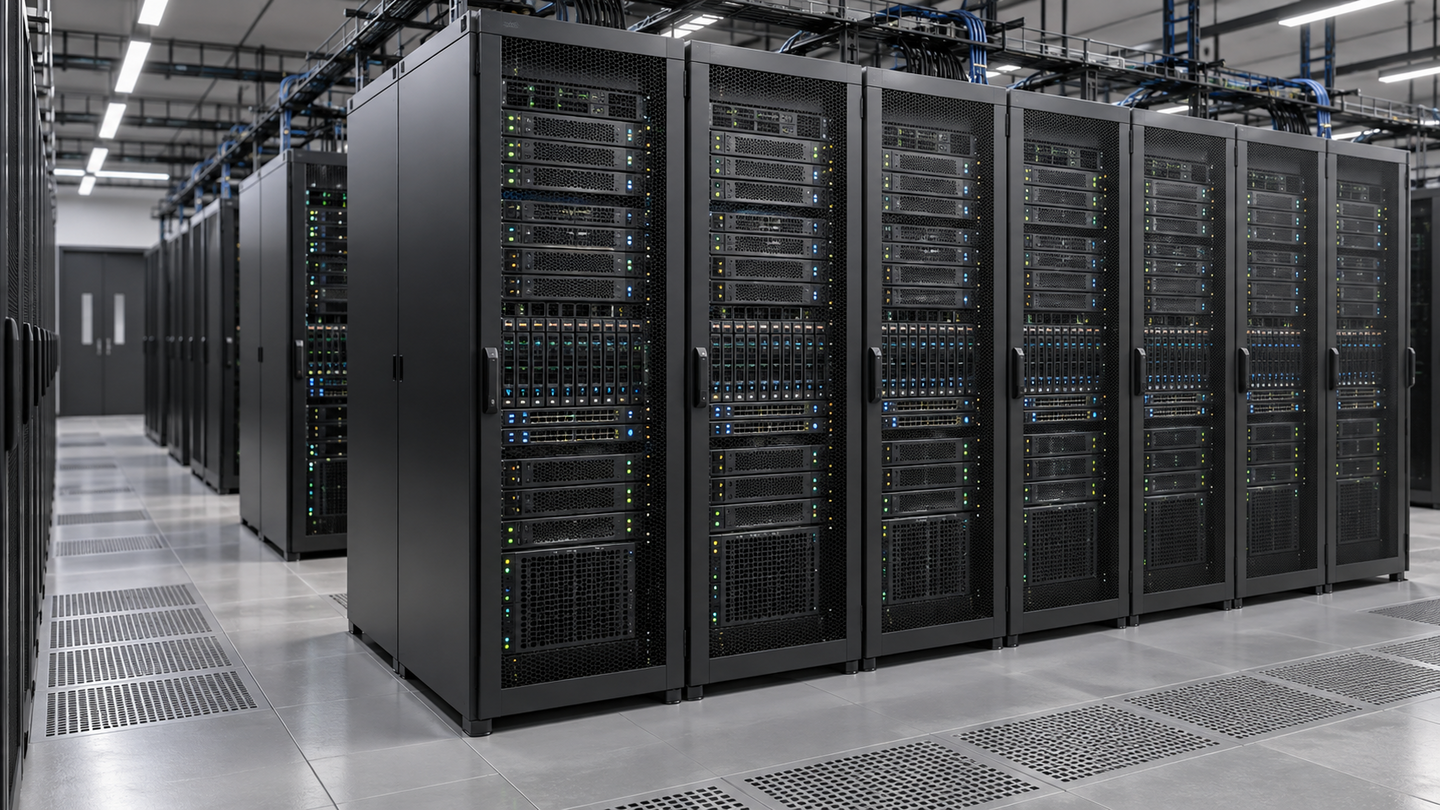
High performance computing makes complex simulations and data analysis possible. But when is an HPC system worthwhile, how do its components work together, and what matters when choosing one?
An engineering model becomes more detailed, the volume of data grows, and calculations take longer and longer. Eventually, the available computing power limits the next step. This is where high performance computing, or HPC, comes in. The number of processors in a system is not the only factor that matters. What counts is how well the hardware, software and application work together.
What does high performance computing mean?
HPC means using computing resources to tackle particularly demanding tasks. This often involves several networked servers working together as a cluster. An individual server in this group is called a compute node. An application can distribute its workload across multiple cores and nodes, provided it is designed to do so.
The underlying principle is parallel computing. Instead of processing every step in sequence, suitable subtasks are handled at the same time. You can also find a short definition in our high performance computing glossary entry. Here, we look at how this principle becomes a practical system.
Where is HPC used?
HPC becomes relevant when computation time, model size or data volume creates a bottleneck. The European supercomputing initiative EuroHPC lists weather and climate modelling, materials research, medical research and artificial intelligence among its applications.
- Simulation: Fluid flows, mechanical stresses or heat distribution can be investigated for different designs.
- Research: Complex models can help researchers better understand molecules and material properties, for example.
- Data analysis: Large measurement and research datasets can be evaluated systematically.
- AI: Computationally intensive training runs use powerful infrastructure and often specialised accelerators.
HPC and AI are not the same thing. Traditional simulations can work without machine learning. Conversely, not every AI application needs a large cluster. Both areas can, however, benefit from fast compute nodes, suitable storage systems and high-performance networking.
How is an HPC system structured?
Compute nodes, processors and memory
The compute nodes carry out the actual calculations. CPUs handle a wide range of tasks, while GPUs can accelerate suitable operations with a high degree of parallelism. Whether an application benefits also depends on its software support. Sufficient memory and a data supply that keeps pace with the computing performance are equally important.
Networking and data storage
During distributed calculations, nodes exchange data. Long transfer times can limit the gains from additional processors. Reading input data and writing results also contribute to the overall runtime. Networking and storage are therefore not merely add-ons: they are part of performance planning.
Software and job scheduling
On shared clusters, calculations are often submitted as jobs. A scheduler such as Slurm manages queued jobs and allocates resources to them. Users specify, for example, how many compute nodes and how much runtime they need. This provides an orderly way to access shared infrastructure, but it does not automatically make an application parallel or faster.
Why more cores do not automatically mean more speed
A program often contains sections that must run sequentially. Communication and coordination between parallel parts add further overhead. Doubling the number of cores therefore does not necessarily halve the runtime. The introductory tutorial from Lawrence Livermore National Laboratory explains these limitations in terms of parallelisation and scalability.
In practice, this means testing the actual application with representative data. A configuration may be an excellent fit for one computing job and unnecessarily large for another. What matters is not the highest number on a specification sheet, but the result in your own workflow.
Five questions to ask before choosing an HPC system
- Which tasks need to run faster? Identify the applications, data volumes and desired time to result.
- How well does the software scale? Compare different core and node counts, and assess a GPU version where appropriate.
- Where are the bottlenecks? Consider memory, data transfer and input/output as well as computing power.
- What is the total cost of operation? Include acquisition, licences, administration, electricity and cooling.
- How will success be measured? Define comparable criteria for runtime, result quality and energy use per calculation.
These questions provide a useful starting point for specifying a system. To compare hardware, the MEGWARE Benchmark Center offers tests with your own applications. This allows decisions to be based on measured results.
Conclusion: Good HPC planning starts with the application
An HPC system should solve demanding tasks reliably and cost-effectively. The right configuration therefore brings together the application, computing power, memory, storage, networking and operation. Defining your requirements first and then testing them against measurable criteria creates a sound basis for investment.
Are you planning a cluster or looking to develop an existing system further? Explore our HPC solutions or talk to us about your project.